
NingXia Red: More Than Just a Superfruit Drink
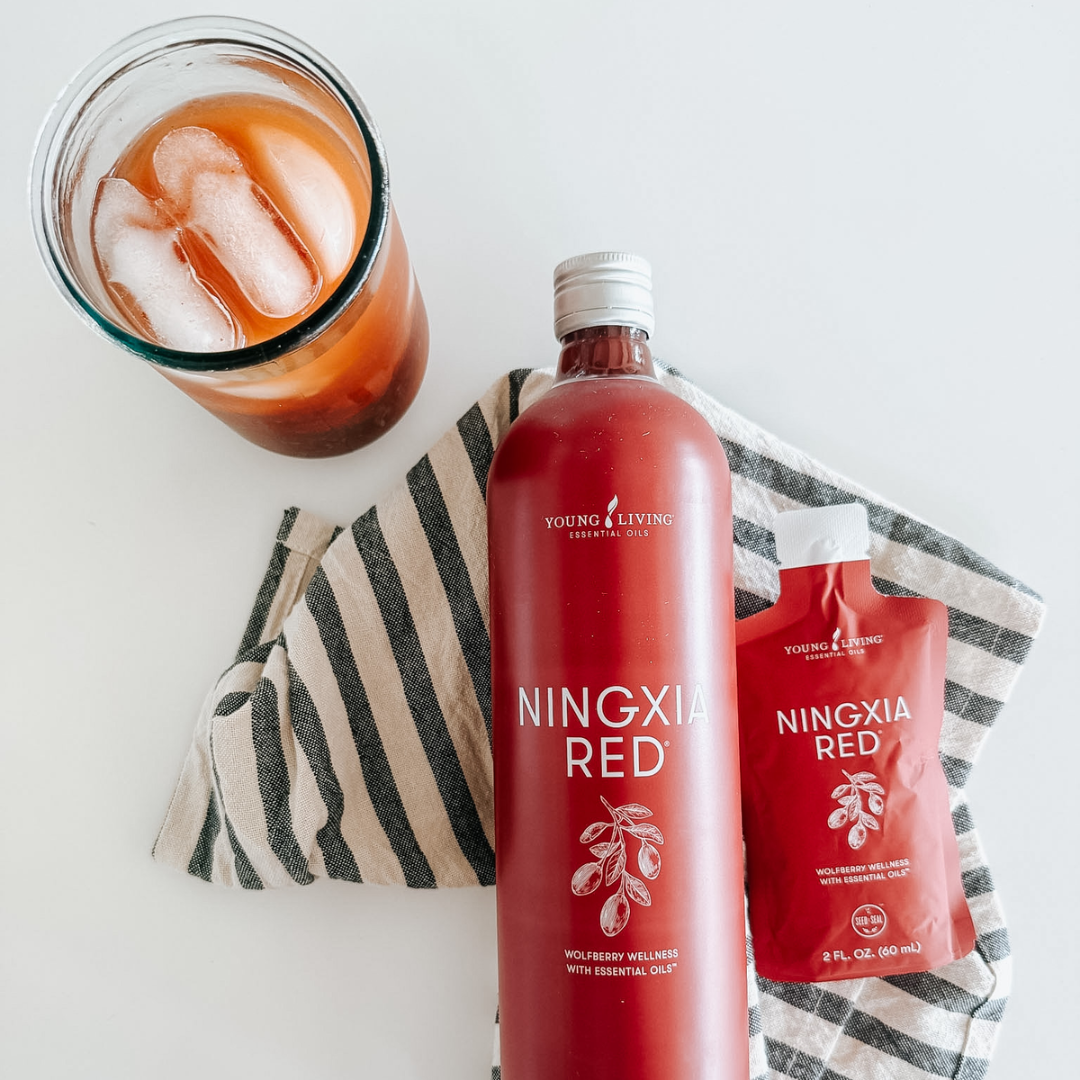
The science behind wolfberries, antioxidants, cellular health, energy, and healthy aging.
Have you ever hit 2 PM and felt like your brain was moving through molasses, even though you thought you were eating pretty well?
Maybe you’re reaching for another cup of coffee, craving something sweet, or wondering why your energy has completely disappeared.
Sound familiar?
As an Integrative Nutrition Health Coach, I’ve spent years learning about the connection between nutrition, blood sugar balance, oxidative stress, hormones, and how our bodies produce energy.
And one thing I keep coming back to is this:
Our bodies need more than calories. They need NOURISHMENT!
That’s one of the reasons I’ve loved Young Living’s NingXia Red for so many years.
If you’ve been following me since I started sharing Young Living in January 2014, you probably know that this little red drink has been part of my wellness world for a LONG time!
But what makes it so special?
Is it just another expensive fruit juice? What exactly are wolfberries? And is there actual science behind it?
Let’s get into it!

First, What Exactly is NingXia Red?
NingXia Red is a concentrated superfruit beverage featuring whole-fruit Ningxia wolfberry puree, combined with five additional antioxidant-rich fruits and four citrus essential oils.
And NO, it’s not the same thing as picking up a bottle of ordinary fruit juice at the grocery store.
At the heart of the formula is the Ningxia wolfberry, also known as the goji berry or Lycium barbarum.
These small red berries have been valued in traditional Chinese food culture for centuries.
What fascinates me is that modern researchers are now studying many of the same compounds that make these berries nutritionally interesting.

What’s Inside NingXia Red?
The six superfruits:
- Ningxia wolfberry: Provides carotenoids, including zeaxanthin, along with polyphenols and naturally occurring polysaccharides.
- Aronia berry: Known for its rich concentration of anthocyanins, the pigments responsible for its deep purple color.
- Pomegranate: Contains polyphenols, including compounds called punicalagins.
- Plum: Provides naturally occurring phenolic compounds and other plant nutrients.
- Sweet cherry: Contains anthocyanins and additional antioxidant compounds.
- Blueberry: Rich in flavonoids, particularly anthocyanins.
PLUS four citrus essential oils:
Orange, Yuzu, Lemon, and Tangerine.
These contribute aromatic compounds and give NingXia Red its distinctive citrus flavor.
What I love about this combination is that you’re getting a variety of plant compounds in one small serving.
And that’s where the conversation about cellular nourishment becomes really interesting!

Why Antioxidants Matter More Than You Might Think
Let’s talk about something happening inside your body every single day.
Oxidative stress.
You’ve probably heard the term, but what does it actually mean?
As your body produces energy, responds to environmental exposures, and carries out normal metabolic processes, it generates molecules called reactive oxygen species.
These molecules aren’t automatically bad!
Your body actually uses some of them for important functions, including cellular signaling and immune defense.
But when their production exceeds your body’s ability to manage them, oxidative stress can develop.
Over time, excessive oxidative stress can contribute to damage involving cell membranes, proteins, and DNA.
And this is one reason nutrition matters so much.
Your body has its own antioxidant defense systems, including enzymes called:
- Superoxide dismutase (SOD)
- Glutathione peroxidase (GPx)
- Catalase
Think of these as part of your body’s built-in cellular maintenance team.
Certain nutrients and plant compounds can influence antioxidant activity and help support the body’s ability to maintain cellular balance.
And THIS is one of the reasons wolfberry research caught my attention!
The Science Behind NingXia Red
I love personal experiences, but I also love understanding what’s happening behind the scenes.
And yes, there are actual human clinical studies worth looking at!
1. Energy, Sleep, and Overall Well-Being
In 2022, researchers published a clinical trial examining NingXia Red itself.
This is important because many studies on superfruits examine individual ingredients rather than the finished product.
The study followed healthy adults over 60 days. Participants in the supplement group consumed 60 mL, approximately 2 ounces, of NingXia Red daily.
Researchers analyzed data from 155 participants.
The findings included:
- Improvements in reported sleep duration and sleep-related measures
- Improvements in several measures of physical well-being
- Shorter reported illness duration among participants who became ill
Young Living’s study materials also report improvements in perceived energy and stress.
One particularly interesting finding was an average increase of approximately 21 minutes of sleep.
Now, I talk about sleep ALL the time because sleep affects everything from appetite regulation and metabolic health to mood, recovery, and hormone signaling.
So naturally, I find this research fascinating!
The study was relatively short and participants knew whether they were receiving the beverage, so larger, blinded studies would help establish how consistent these benefits are.
2. Supporting the Body’s Own Antioxidant Defenses
Here’s another study I find especially interesting.
Researchers conducted a randomized, double-blind, placebo-controlled trial involving 50 healthy adults between the ages of 55 and 72.
Participants consumed a standardized wolfberry juice called GoChi daily for 30 days.
The researchers measured several markers of antioxidant activity.
Here’s what they found in the wolfberry group:
- Superoxide dismutase activity increased by 8.4%.
- Glutathione peroxidase activity increased by 9.9%.
- Malondialdehyde, a marker associated with lipid oxidation, decreased by 8.7%.
These changes were statistically significant.
Why is that interesting?
Because the researchers weren’t simply measuring antioxidants in a laboratory dish. They were looking at measurable changes in the human body.
This study used a different wolfberry juice, not NingXia Red, and a larger serving size. So we cannot assume identical results from a 2-ounce serving of NingXia Red.
But it does help us understand why scientists continue studying wolfberries.
3. Wolfberries and Immune Health
Your immune system is incredibly complex.
And here’s something I always remind people:
A healthy immune system isn’t simply about making it stronger. It’s about helping it respond appropriately.
In another randomized, placebo-controlled human trial, 60 healthy older adults consumed standardized wolfberry juice or a placebo for 30 days.
Researchers observed increases in certain immune-related measurements, including lymphocyte counts, interleukin-2, and immunoglobulin G.
Participants also reported improvements in some measures of general well-being.
Not every immune marker changed, which is important to understand.
But the findings suggest that wolfberry compounds may influence certain aspects of normal immune function.
Again, this was research on standardized wolfberry juice rather than the finished NingXia Red formula.
4. Eye Health and Healthy Aging
Now THIS is something I find especially interesting as we get older!
Wolfberries are naturally rich in a carotenoid called zeaxanthin.
Zeaxanthin is concentrated in the macula, the central part of the retina responsible for sharp, detailed vision.
Along with lutein, it contributes to macular pigment, which helps filter certain wavelengths of light and supports antioxidant protection in the eye.
In a randomized clinical trial involving 150 adults ages 65 to 70, researchers studied a specialized goji berry preparation over 90 days.
Compared with placebo, the goji group experienced:
- A 26% increase in plasma zeaxanthin
- A 57% increase in measured antioxidant capacity
- More stable measurements of certain macular characteristics
These are interesting findings for healthy aging research, although they don’t prove that NingXia Red prevents age-related eye disease.
Research: Goji Berry Effects on Macular Characteristics and Plasma Antioxidant Levels (2011)
Let’s Talk About Your Bloodstream and Cellular Health
Here’s something I think is important to understand.
Your red blood cells have a VERY important job!
They carry oxygen from your lungs to tissues throughout your body, including your brain, muscles, and organs.
And oxygen is essential for cellular energy production.
You may have seen live-blood microscopy demonstrations showing red blood cells stacked together like little rolls of coins.
That stacking is called rouleaux formation.
It’s a real phenomenon, although what appears under a microscope can be influenced by sample preparation and other factors.
Some wellness demonstrations have suggested that NingXia Red rapidly changes the way red blood cells appear.
Those demonstrations are interesting, but they don’t establish that drinking NingXia Red improves oxygen delivery or blood circulation within minutes.
What interests me more is the published research examining wolfberry compounds, antioxidant enzymes, and markers of oxidative stress.
Because understanding how nutrition interacts with our cells is far more valuable than chasing a dramatic before-and-after picture.
What About Blood Sugar? Isn’t NingXia Red Still Fruit Juice?
I’m SO glad we’re talking about this!
If you’ve been following The Nourishment Shift, you know how passionate I am about metabolic health and blood sugar regulation.
And yes, NingXia Red contains naturally occurring sugars.
Even though it contains wolfberry puree and other fruit ingredients, it is still a concentrated fruit beverage.
So let’s be practical.
A small serving of NingXia Red isn’t the same as drinking a giant glass of fruit juice.
But portion size matters!
If you’re working on improving blood sugar balance, here are a few things I’d consider:
- Stick with the recommended serving size.
- Try enjoying it with or after a balanced meal rather than drinking it alongside a carbohydrate-heavy snack.
- Pay attention to your individual glucose response if you use a continuous glucose monitor.
- Remember that the fiber in whole berries generally makes them metabolically different from juice.
And please don’t assume that antioxidant content automatically means a beverage cannot raise blood sugar.
My philosophy has always been about understanding what we’re putting into our bodies and making it work WITH our individual needs.
Why I’ve Continued Using NingXia Red Since 2014
I’ve incorporated a LOT of different wellness tools into my life and practice over the years.
Nutrition education, essential oils, supplements, metabolic health strategies, sleep routines, and so much more.
But some products have remained part of my wellness world for a very long time.
NingXia Red is one of them.
I love that it’s simple.
I love the combination of superfruits.
And I love that there is actual research exploring both the finished beverage and its primary ingredient.
But I also want you to understand something.
No single supplement or superfruit drink can make up for consistently poor sleep, inadequate nutrition, chronic stress, or an unhealthy lifestyle.
That’s why I always come back to the foundations.
Protein. Fiber. Healthy fats. Blood sugar balance. Movement. Sleep. Stress management.
NingXia Red is something I enjoy incorporating INTO those habits.
Not instead of them.
How Much NingXia Red Should You Drink?
Young Living’s suggested usage is 1 to 2 ounces, twice daily.
I personally like the idea of starting with a small serving and building a routine that fits your lifestyle.
A few easy ways to enjoy it:
- Chilled, straight from the bottle
- Added to a smoothie
- With breakfast
- As part of an afternoon wellness routine
- In a convenient 2-ounce Single when traveling
- With a drop of an appropriately labeled Vitality essential oil for a little extra flavor
Just shake it well before serving!
Frequently Asked Questions About NingXia Red
Does NingXia Red contain caffeine?
NingXia Red itself does not contain caffeine. NingXia Nitro is a separate product with a different formula, so don’t confuse the two.
Is NingXia Red the same as goji berry juice?
Not exactly. NingXia Red combines whole-fruit wolfberry puree with additional superfruits and citrus essential oils.
Can NingXia Red replace my daily fruits and vegetables?
No. I look at it as an addition to a varied, nutrient-rich diet, not a replacement for whole produce.
Does NingXia Red contain sugar?
Yes. It contains naturally occurring fruit sugars. Check the current nutrition label for the amount per serving, particularly if you’re monitoring carbohydrate intake.
Can children enjoy NingXia Red?
It’s a fruit-based beverage, but serving size, individual dietary needs, allergies, and the manufacturer’s age guidance matter. For young children, check with their pediatrician.
What’s the difference between NingXia Red and NingXia Nitro?
NingXia Red is the daily superfruit beverage.
NingXia Nitro is a separate supplement formulated for energy and focus. The ingredients and directions are different.
How long does a bottle last?
A 750 mL bottle contains approximately 25.4 fluid ounces.
At 2 ounces daily, one bottle lasts approximately 12 to 13 days.
At 4 ounces daily, it lasts approximately 6 days.
Ready to Give NingXia Red a Try?
If you’re curious about incorporating NingXia Red into your daily wellness routine, I think the Starter Bundle is a convenient way to begin.
It includes:
- Two 750 mL bottles of NingXia Red
- Thirty 2-ounce NingXia Red Singles
- NingXia Nitro for an additional energy and focus option
The Singles are especially convenient for travel, work, and busy days when you’re away from home.
Explore the NingXia Red Starter Bundle
Bundle contents, pricing, and availability may change. Check the current offer before ordering.
One Last Thought
I hope this helped you understand why I’ve been fascinated with NingXia Red for so many years.
Not because I believe one drink is going to magically transform your health.
But because I believe that learning how to nourish our bodies, right down to the cellular level, can change the way we approach our everyday habits.
And sometimes it starts with something as simple as adding a little more nutrient-rich variety to your day.
If you have questions about NingXia Red, want help choosing the right option, or would like to explore how it could fit into your wellness routine, please reach out!
I’d love to help.
Viviane
Integrative Nutrition Health Coach
The Nourishment Shift | Aroma Nest Family
Scientific References
- Effects of Antioxidant Supplement on Immune Health and Physical Wellbeing: A Randomized, Controlled Trial (2022)
- Lycium barbarum (Goji) Juice Improves In Vivo Antioxidant Biomarkers in Serum of Healthy Adults (2009)
- Immunomodulatory Effects of a Standardized Lycium barbarum Fruit Juice in Chinese Older Healthy Human Subjects (2009)
- Goji Berry Effects on Macular Characteristics and Plasma Antioxidant Levels (2011)
- A Randomized, Double-Blind, Placebo-Controlled Clinical Study of the General Effects of a Standardized Lycium barbarum Juice (2008)
Research note: Studies using standardized wolfberry juices or other goji preparations provide information about those ingredients, but their findings should not be interpreted as direct clinical evidence for NingXia Red.
Educational disclaimer: This article is intended for general wellness education and is not a substitute for individualized medical advice. Supplements are not intended to diagnose, treat, cure, or prevent disease.
About The Author

Leave A Comment