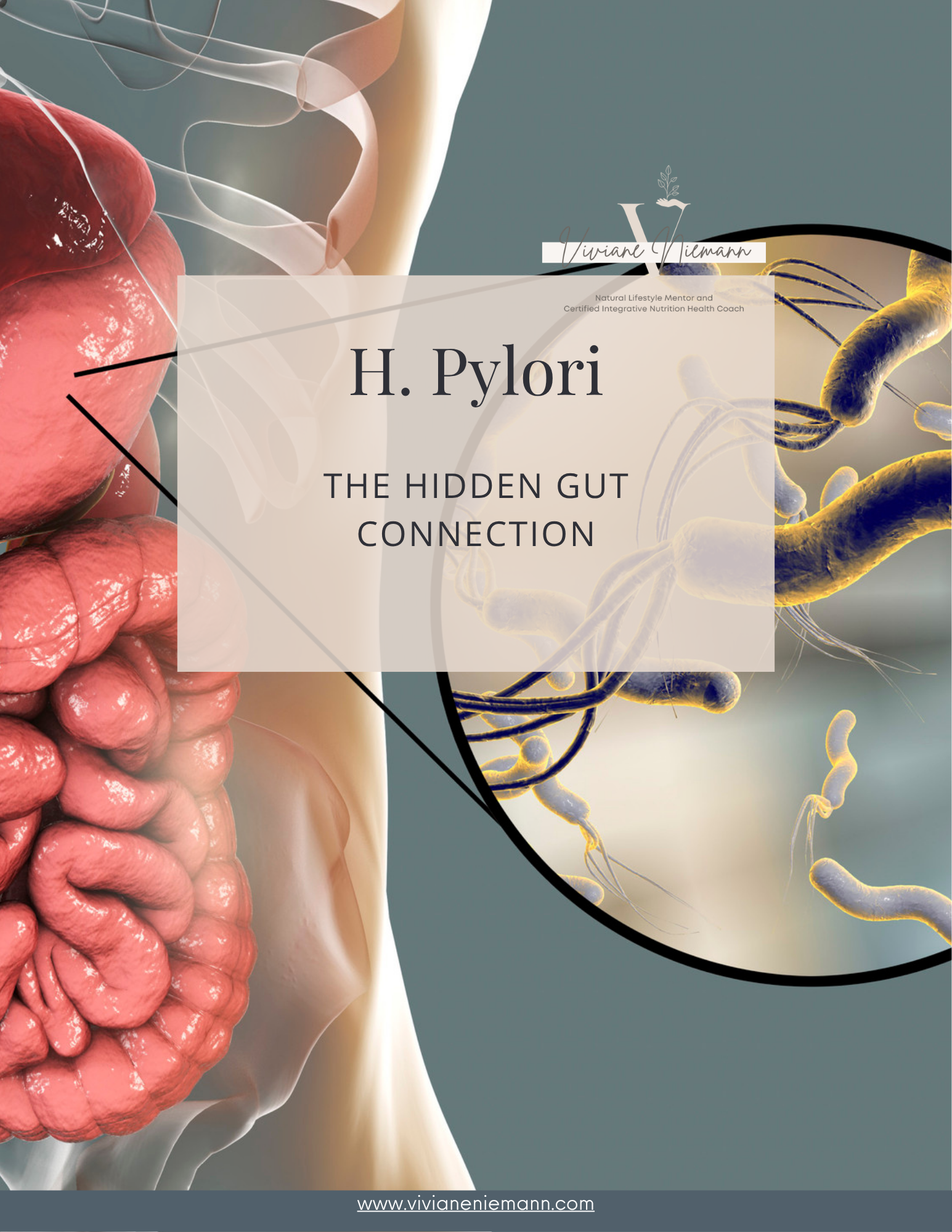
The Hidden Gut Connection
Could your heartburn, bloating, or unexplained digestive discomfort be trying to tell you something?
Heartburn. Acid reflux. Bloating. Burning stomach pain. Constant burping.
Sound familiar?
Most of us have experienced digestive discomfort at some point. We might blame something we ate, reach for an antacid, or simply learn to live with it.
But what if there’s something more going on beneath the surface?
One possibility that often gets overlooked is a bacterium called Helicobacter pylori, better known as H. pylori.
And understanding this little bacterium could be an important piece of your health puzzle.
What Is H. Pylori?
H. pylori is a bacterium that can live in the protective mucus layer of your stomach.
It’s incredibly common; an estimated 40–50% of people worldwide carry it, and many have absolutely no symptoms.
But for others, it can contribute to chronic inflammation of the stomach lining, gastritis, peptic ulcers, and problems with nutrient absorption.
Here’s what makes it particularly interesting: H. pylori produces an enzyme called urease, which helps it survive in the stomach’s acidic environment.
Depending on where the infection causes inflammation, it can also influence stomach acid production.
And because symptoms can overlap with other digestive conditions, the underlying infection may go undetected for years.
The Symptoms You Might Be Overlooking
Not everyone with H. pylori experiences symptoms. But when symptoms do appear, they may include:
- Heartburn or acid reflux
- Burning or gnawing pain in the upper abdomen, especially when the stomach is empty
- Persistent bloating and excessive burping
- Nausea or an unsettled stomach
- Feeling full after eating only a small amount
- Loss of appetite
- Frequent indigestion or upper abdominal discomfort
Some people also report bad breath, fatigue, brain fog, or other seemingly unrelated concerns.
These symptoms don’t automatically mean you have H. pylori. But they may be reasons to investigate further rather than simply masking the discomfort.
Sometimes connecting the dots starts with asking better questions.
Why H. Pylori Deserves More Attention
This is the part I especially want to raise awareness about.
H. pylori isn’t just about an occasional upset stomach.
When an infection persists, it can contribute to chronic inflammation and damage to the stomach lining.
Over time, potential complications include:
Chronic gastritis and stomach ulcers
Ongoing inflammation can damage the stomach’s protective lining, increasing the risk of painful ulcers.
Vitamin B12 deficiency
H. pylori-associated gastritis may interfere with vitamin B12 absorption. Low B12 can contribute to fatigue, weakness, memory and concentration difficulties, and tingling or numbness in the hands and feet.
Iron deficiency
H. pylori infection can sometimes be associated with unexplained iron deficiency, even without obvious digestive symptoms.
An increased risk of stomach cancer
This is one of the most important connections to understand.
The World Health Organization’s International Agency for Research on Cancer classifies H. pylori as a Group 1 carcinogen, meaning it is a proven cause of cancer in humans.
Persistent infection is a major risk factor for non-cardia gastric cancer and certain types of gastric lymphoma.
This does NOT mean everyone with H. pylori will develop cancer. Most people won’t.
But it does mean that identifying and appropriately treating an infection matters.
And it’s exactly why I believe awareness and early detection are so important.
What Can You Do?
Start by becoming curious about what your body is telling you.
If you’re experiencing ongoing digestive symptoms, consider discussing H. pylori testing with a qualified healthcare professional.
Common testing options include a urea breath test or stool antigen test.
And if H. pylori is detected, understanding your options, addressing the infection, supporting the stomach lining, and restoring digestive health are important parts of the conversation.
I personally love exploring the connections between nutrition, gut health, lifestyle, and the body’s incredible ability to heal and restore balance.
But supporting gut health and successfully eliminating an H. pylori infection are not necessarily the same thing. A confirmed infection deserves appropriate treatment and follow-up testing.
FREE GUIDE: H. Pylori, The Hidden Gut Connection

I’ve put together a guide sharing what I’ve been learning about this often-overlooked bacterium.
Inside, we’ll explore:
- Common and lesser-known symptoms
- How H. pylori interacts with stomach acid and the stomach lining
- Connections to vitamin B12, iron, and nutrient absorption
- Why chronic inflammation and stomach cancer risk deserve attention
- Testing options and why follow-up matters
- Natural approaches being explored for digestive and stomach-lining support
- Nutrition, beneficial bacteria, and ways to support a healthier gut environment
- Some of my favorite holistic wellness tools and Young Living products for digestive support
My hope is that this guide encourages you to ask questions, explore the connections, and become a more informed advocate for your own health.
Your body may be giving you clues. Let’s learn how to listen.
Let’s connect!
I’d love to keep in touch and share more wellness tips, natural solutions with you. If you enjoyed this post, come say hi and follow along:
- Facebook.com/Viviane.Niemann98
- Facebook.com/VivianeNiemannBlog – I’d be so grateful if you gave it a LIKE and FOLLOW as I restart and rebuild it!
- Facebook.com/AromaNestFamilyBlog/
🌿 Join Our Wellness Family
If you’re a client or affiliate partner by purchasing wellness tools through my links, you’re warmly invited to join our private Facebook community:
The Wellness Boutique / Aroma Nest Community
👉 Please message me first on Facebook
Warmly,
